
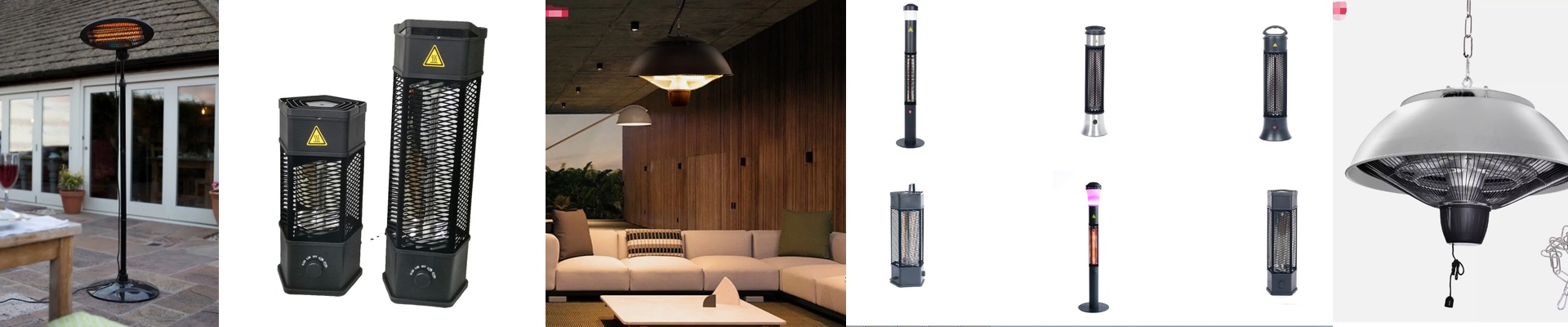


Getting the Heat Right for Your Space
Choosing the right patio heater isn’t about guessing how much power you need. It’s about matching the heat to the space itself. An open patio that catches the wind? Heat vanishes fast. A cozy, enclosed spot? The warmth sticks around. We figure out exactly what your space demands and match the heater to it. Take our 2000W infrared unit, for example. It puts out about 6,800 BTU/hr, which is just the ticket for keeping a semi-enclosed area around 150 square feet feeling toasty. Go too small, and nobody stays warm. Go too big, and you’re just wasting energy and pushing your electrical system to its limit.
How Infrared Heat Actually Works
Infrared heaters are different. They send out radiant energy that warms people and things directly, not the air around them. That’s why they’re perfect for outdoors, where the wind makes convection heaters pointless. The heart of our units is a tough quartz tube. It fires up almost instantly, sending targeted warmth right where you need it. And that R7s connector? It’s the standard for a reason. It’s a secure, high-temp connection that handles the constant heating and cooling without getting loose or failing. This isn’t some delicate bulb. It’s a rugged, industrial-grade component built to take a beating.
The Trade-offs You Should Know
Our goal is simple: give you a heater that drops in and solves the problem without a major site overhaul. We design for easy installation. But here’s the trade-off: serious power means serious heat. A 2500W unit generates a lot of it, which means the heater itself and the surfaces around it get hot. You need proper clearance. The wiring has to be up to the job. We give you all the specs so you can plan the install right from the start. This isn’t just about installing a heater; it’s about engineering a solution.
The Point of It All: Usable Outdoor Space
The goal is simple: turn your outdoor area into a comfortable, usable space, no matter the season. Our infrared heaters deliver focused warmth right to the people using the space, cutting right through the wind chill. For the folks planning the install, the payoff is control. These units are flexible, dependable, and easy to service. You’re not just buying a heater. You’re putting together a thermal system that works with the environment, not against it.
Respect the Power
High wattage means serious heat. A 2500W unit can warm up a small, enclosed patio in no time. But that power demands respect. The circuit needs to be dedicated and properly insulated. The heater needs clearance from anything flammable. The housing gets hot enough to burn you. This is industrial equipment. We build it to perform, but you have to install it with the same care you’d give any serious piece of machinery. Plan for the heat, and the system will do its job.
It’s All About Matching the Numbers
We match the wattage to the space. A 1500W unit is great for a smaller, sheltered area. Step up to a 2500W unit for a larger, more exposed patio. We match the voltage to what your site provides. The dimensions tell you the footprint. The R7s connector ensures a solid, high-temp connection. Every spec is a direct response to a real, physical need. No guesswork. We give you the numbers, and you plan the layout.
The Installation Is Straightforward, But Serious
Installation is simple, but it’s not something to phone in. The mounting surface has to be solid. The wiring has to meet local codes and handle the full load. And those clearances? They aren’t optional. We provide the guide, but you’re in charge of the prep work. That’s how we make sure the system runs safely and reliably for years.
Why This Approach Works
Infrared heat is direct. It skips the air and warms people and objects straight up. That makes it ideal for patios where wind and open space make conventional heating a waste of time. Our heaters are built around this principle. The quartz tube, the R7s connector, the power ratings—everything is chosen to deliver that direct heat reliably. It’s physics, put to work.
Before You Choose, Check These Three Things
Before you settle on a heater, confirm three key details: the square footage of the space, how well it’s insulated, and the direction the wind usually blows. Then, match the heater’s output to those factors. Double-check the voltage and circuit capacity. And plan the mounting spot with clearances in mind. That’s how you spec a system that actually works.
We Don’t Sell “Warmth.” We Sell Engineered Heat.
We don’t sell “warmth.” We sell engineered heat output. Our infrared patio heaters are configured to match the real-world conditions of your space. The result is a practical, reliable solution that keeps the patio usable, season after season.
The Specs in the Real World
A 2000W unit covers about 150 square feet. A 2500W unit covers about 200 square feet. Think of those as starting points. Adjust for how exposed the space is and how well it’s insulated. The R7s connector gives you a rock-solid connection. The quartz tube delivers fast, direct heat. The whole system is simple, tough, and effective.
Match the Wattage. Check the Voltage. Plan the Install.
Match the wattage to the space. Verify the voltage. Plan the installation. The rest follows. That’s how we engineer comfort into an outdoor environment.
A Reality Check on High Output
High output means high heat. Plan for it. Clearances matter. The wiring has to be rated. The unit will get hot. Treat it like any industrial equipment. Respect the specs, and the system performs.
We Build the Heater. You Engineer the Install.
We build the heater. You engineer the installation. Together, we create a functional, comfortable outdoor space. That’s the practical reality of infrared patio heating.