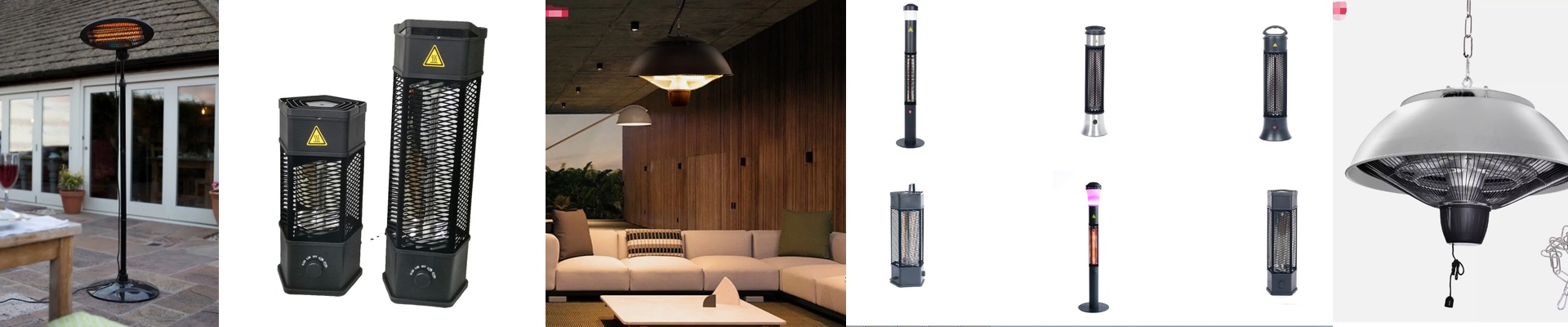


The first cold snap hits, and suddenly your open-air setup feels uninviting. Guests hesitate at the door, and the tables you need for the next round sit empty. The issue isn’t the menu—it’s comfort. We built our new, clean-looking indoor heater as a proper outdoor heating solution, so the patio stays usable even on the coldest nights.
What matters under the hood
This is an electric infrared heater, built around a carbon fiber element. That choice gives you fast heat-up and consistent radiant output. It puts out 1,500 W of focused warmth and plugs into a standard outlet, so you can place it where guests actually gather, not just where wiring happens to be convenient. The beam warms people and surfaces directly, not the air in between. Comfort shows up within seconds. Control is straightforward: an adjustable thermostat holds the setting steady. For safety, tip-over protection and an overheat sensor shut the unit down if something’s off. The front grill and housing have a crisp, modern look that fits a deck as naturally as a living room.
Why this works where you need it
In winter, comfort equals capacity. With infrared warmth, guests feel cozy the moment they sit down, so more tables fill—and they stay longer. That means higher headcount per evening and faster turnover during peak hours. Because the heat is directed where it’s needed, energy use stays sensible. The heater also runs quietly, so conversation doesn’t have to compete with noise. The upshot is a patio that performs through the cold months, turning winter into steady business instead of a slow season.
What to keep in mind
Plan your clearances. Keep combustibles at a safe distance and follow the spacing guidance that comes with the unit. These heaters are designed for covered or partially sheltered outdoor areas. Direct exposure to heavy rain or wind will cut into performance, so placement matters. Plug into a grounded outlet on a dedicated circuit. If space is tight, size the unit appropriately to avoid overloading the circuit. Set the thermostat once, then tweak only when conditions change.