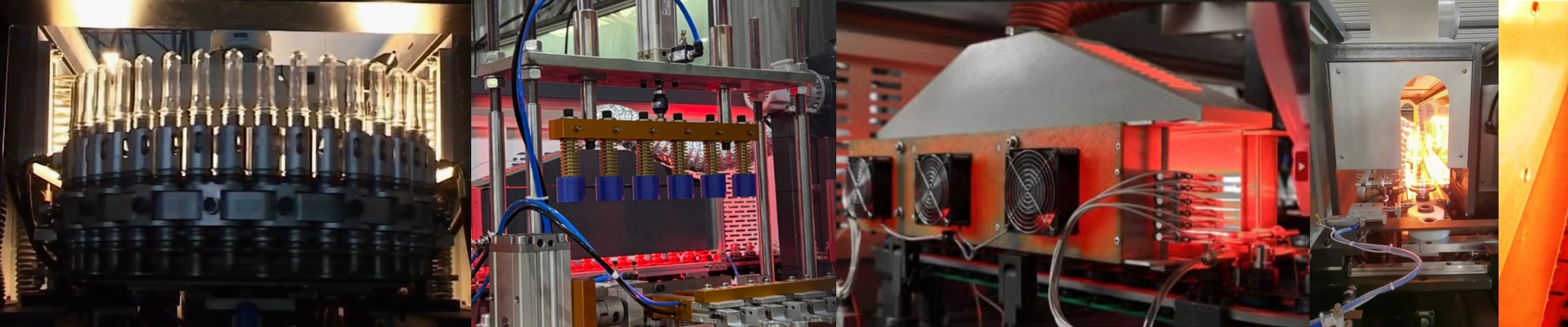


On the plant floor, the heating tunnel sets the pace. If your preform heating can’t lock in the right thermal profile quickly, you’re bleeding shots per hour—and you’re flirting with neck crystallization and uneven walls. We built a high-efficiency NIR heater to turn that bottleneck into a repeatable process, whether you’re running Sidel, Krones, SIPA, Husky, SACMI, or Nissei ASB. What matters, technically The NIR emitter puts out short-wave energy tuned to PET absorption, so preforms go from surface to core in seconds. The specs are matched to real blow molder layouts: 230V or 400V, 1.5–3.0 kW per zone, a quartz envelope for fast thermal response, and R7s connectors for a direct drop-in fit. The reflector geometry tightens the beam, so you get a clean hot zone with less stray heat. The payoff: quicker heat-up, a tighter temperature spread across the preform, and stable output even when the line is pushing the machine. Why it works on your floor Drop this into your heating tunnel and you’ll cut warm-up time, trim power draw, and run more consistent cycles. NIR heats the preform directly, not the air around it, so you use less energy. You also get longer emitter life—5,000+ hours with controlled lumen decay—which means fewer changeouts and less downtime. In stretch blow molding, that translates to fewer rejects from off-center heating and more predictable bottle weight and clarity. A few things to keep straight Match the lamp length and focal distance to your sockets and reflector rails. If the positioning is off, the heat profile will drift. Keep the tunnel clean and reflective—NIR performs best when the path stays unobstructed. Also, make sure your controller can handle the inrush current; if not, add a soft-start or staggered start. Plan the swap during a scheduled stop, and you’ll be back on spec in minutes.